May 15, 2026

How the Iran Conflict Could Impact Mortgage Rates and the Housing Market

Global events often feel far removed from the real estate market, but major geopolitical conflicts can quickly affect inflation, interest rates, and buyer confidence. A recent article from Inman highlighted how the ongoing conflict involving Iran is creating new uncertainty for the Federal Reserve and raising concerns about future mortgage rates.

As oil prices rise and inflation pressures increase, the Fed appears more divided than ever on whether rate cuts are still realistic in 2026. 

Why the Fed Is Concerned

The biggest issue is energy prices. Disruptions tied to the conflict have pushed oil and gasoline costs higher, contributing to rising inflation. Recent inflation reports showed consumer prices increasing faster than expected, with energy costs playing a major role. 

Normally, the Federal Reserve lowers rates when inflation cools and the economy slows. However, if inflation remains elevated because of global energy shocks, the Fed may decide to hold rates steady—or even consider additional hikes. Several policymakers have warned that prolonged disruptions could force tighter monetary policy. 

What This Means for Mortgage Rates

Mortgage rates are heavily influenced by inflation expectations and bond markets. Even if the Fed does not officially raise rates, uncertainty surrounding inflation can still push borrowing costs higher.

Recent reports already show Treasury yields and long-term borrowing costs increasing as investors react to inflation fears and geopolitical instability. 

For homebuyers, this means mortgage rates could remain volatile throughout 2026.

Impact on Buyers

Higher mortgage rates reduce affordability by increasing monthly payments. Buyers who were waiting for lower rates may face a more complicated environment if inflation remains elevated.

However, many housing markets are also seeing:

  • More inventory
  • Longer days on market
  • Increased negotiation opportunities

This means buyers may still benefit from less competition compared to the intense seller’s markets of recent years.

Impact on Sellers

For sellers, pricing strategy becomes even more important in uncertain rate environments. Buyers tend to become more cautious when rates rise, which can slow demand and extend selling timelines.

Homes that are properly priced, marketed well, and move-in ready are more likely to stand out.

Why This Matters Beyond Real Estate

The housing market does not operate independently from the broader economy. Global conflicts can influence:

  • Inflation
  • Consumer confidence
  • Fuel costs
  • Mortgage rates
  • Construction costs

All of these factors eventually impact housing activity.

Final Thoughts

The Fed’s response to inflation and global instability will likely shape the housing market for the rest of 2026. While many buyers hoped for significant rate cuts this year, rising energy prices and inflation concerns may delay those expectations.

For both buyers and sellers, staying informed and flexible will be essential in a market that continues to shift quickly.

This blog was inspired by reporting from Inman discussing the Federal Reserve, inflation concerns, and the economic impact of the Iran conflict.
 

Posted in Market Updates
May 10, 2026

Housing Demand Is Picking Up as Mortgage Rates Ease — What It Means for Columbus Buyers and Sellers

Recent housing data shows that buyer demand is beginning to rebound as mortgage rates pull back from April highs. According to a recent report discussed by Inman and Redfin, falling rates are encouraging more buyers to reenter the market after months of hesitation. While affordability challenges still exist, many buyers appear ready to move once borrowing costs become more manageable.

This national trend is also showing up locally in the Columbus market.

Columbus Market Snapshot — March 2026

The latest Columbus REALTORS® MLS data shows that the local market remains active and resilient despite shifting conditions. Home prices continue to rise while inventory slowly improves, creating a more balanced environment than buyers experienced over the past few years. 

Home Prices Continue to Climb

The Columbus-area median sales price reached $335,000, up 4.7% from March 2025. Meanwhile, the average sales price increased to $372,238, reflecting continued long-term appreciation. 

Although price growth remains strong, the pace is becoming more stable compared to the rapid increases seen during peak pandemic-era markets.

More Inventory Is Giving Buyers Options

One of the biggest shifts in the market is the increase in available homes. Inventory across the Columbus MLS rose 3.1%, giving buyers more choices and reducing some of the intense competition that dominated recent years. 

At the same time, homes are spending more time on the market. Days on market increased from 39 days to 46 days, a nearly 18% increase year over year

For buyers, this creates opportunities to negotiate more strategically rather than rushing into bidding wars.

Demand Remains Steady

Despite affordability concerns, buyer activity has not disappeared. Closed sales in the Columbus MLS were essentially flat year over year, increasing slightly by 0.5%, while year-to-date contracts rose 3.1%

This suggests that many buyers are still active but becoming more selective and rate-sensitive.

What Sellers Should Know

Sellers are still benefiting from strong pricing, but the market is no longer as forgiving when homes are overpriced or poorly presented.

Today’s sellers should focus on:

  • Competitive pricing
  • Strong marketing and staging
  • Realistic expectations on timing
  • Preparing for more negotiation

Homes that are priced correctly and presented well are still performing strongly.

What Buyers Should Know

Lower mortgage rates are helping improve affordability slightly, and rising inventory means buyers have more room to explore options.

For buyers, this market offers:

  • More negotiating leverage
  • More homes to choose from
  • Less pressure to make rushed decisions
  • Opportunity before prices rise further

While the market has cooled compared to previous years, home values in Columbus continue to trend upward long term.

Final Thoughts

The combination of easing mortgage rates and improving inventory is creating a healthier, more balanced housing market. Columbus remains a strong real estate market with steady demand and continued price growth, but both buyers and sellers need to adjust to changing conditions.

For sellers, strategy matters more than ever. For buyers, patience and preparation may finally be paying off.

This blog was inspired by reporting from Inman’s April 30, 2026 article discussing Redfin housing data and local Columbus REALTORS® MLS statistics.

Posted in Market Updates
April 29, 2026

March 2026 Housing Market Update: What Buyers and Sellers Need to Know

The March 2026 market data for the entire MLS shows a housing market that remains strong, but with signs of moderation. Home values are still increasing, demand is steady, and inventory is improving. At the same time, homes are taking longer to sell, giving buyers more room to negotiate than they had in recent years.

Overall, this market reflects healthier balance rather than a dramatic slowdown.

Key Market Highlights

Home Prices Continue to Rise

The median sales price reached $335,000, up 4.7% year over year. This shows that home values continue to appreciate at a solid pace.

The average sales price climbed to $372,238, up 0.7%, suggesting growth is still happening but beginning to stabilize.

Homes Taking Longer to Sell

The average days on market increased to 46 days, up 17.9%. This means buyers are taking more time before making offers, and sellers may need to be more patient than in previous fast-moving markets.

More Inventory Available

Housing inventory rose 3.1%, giving buyers more choices and reducing some of the intense competition seen in tighter markets.

Demand Remains Steady

Closed sales were nearly unchanged at +0.5%, showing that buyer demand is still active, just not accelerating rapidly.

Buyers Gaining Slight Leverage

The percentage of list price received dipped slightly to 96.8%, meaning sellers are negotiating more often and buyers may have greater opportunity to secure concessions or price reductions.

What This Means for Sellers

Sellers are still in a strong position because prices remain elevated. However, the days of overpricing a property and expecting immediate multiple offers may be fading.

To succeed in this market:

  • Price your home competitively
  • Focus on presentation and staging
  • Be prepared for longer selling timelines
  • Work with an agent who understands current buyer behavior

Well-prepared homes can still perform strongly, but strategy matters more than ever.

What This Means for Buyers

Buyers finally have some breathing room. More inventory and longer market times create better opportunities to shop carefully and negotiate.

Buyers should consider:

  • More homes to choose from
  • Less pressure to rush decisions
  • Increased chance of negotiating repairs or price
  • Rising prices that could make waiting more expensive later

While the market is calmer, values are still increasing, so timing still matters.

Final Thoughts

March 2026 reflects a market that is transitioning into a healthier pace. Prices remain strong, but conditions are becoming more balanced between buyers and sellers. For both sides, smart pricing, preparation, and local expertise will be key to success moving forward.

Posted in Market Updates
April 26, 2026

Protecting Your Real Estate License: Mistakes That Can End a Career

Building a career in real estate takes time, effort, and dedication. Losing your license, however, can happen much faster than many people realize. A single unethical decision, repeated carelessness, or failure to follow regulations can lead to disciplinary action that damages both your income and reputation. Inspired by reporting from Christy Murdock’s article, How not to lose your real estate license (and torpedo your career), this post looks at common risks real estate professionals face and how to avoid them.

Why Licenses Are at Risk

Most real estate agents work hard to help clients honestly and professionally. Still, complaints happen every year for issues that could have been prevented. In many cases, the problem is not one dramatic mistake but a pattern of poor habits, lack of documentation, or ignoring legal responsibilities.

Because agents handle contracts, money, negotiations, and sensitive personal information, they are held to a high standard. Regulators expect professionalism, fairness, and honesty.

Common Mistakes That Lead to Discipline

1. Violating Fair Housing Rules

Fair housing violations are among the most serious complaints in real estate. This includes refusing service, steering buyers toward certain neighborhoods, or using discriminatory language in marketing.

Even unintentional bias can create problems, so agents must be careful with how they communicate and advise clients.

2. Misleading Clients

Providing false information about a property, hiding defects, exaggerating market conditions, or making promises that cannot be guaranteed can all create legal trouble.

Clients depend on agents for accurate guidance. If they feel misled, complaints often follow.

3. Poor Recordkeeping

Verbal agreements and undocumented conversations can quickly turn into disputes. If expectations are not written clearly, it becomes difficult to prove what was agreed upon.

Strong documentation protects both the client and the agent.

4. Mishandling Funds

Escrow deposits and client money must be handled carefully and according to state law. Errors with trust accounts, delays, or misuse of funds can result in severe penalties.

5. Interfering With Existing Contracts

Attempting to take another agent’s client or encouraging someone to break an existing agreement is both unethical and risky.

What Happens After a Complaint?

Depending on the state, a complaint may trigger an investigation by a licensing board or attorney general’s office. If evidence supports the complaint, the agent may face hearings, fines, probation, suspension, or license revocation.

Some cases involving fraud or theft can also lead to criminal charges.

How to Protect Yourself

Real estate professionals can reduce risk by:

  • Staying current on laws and continuing education
  • Communicating clearly and honestly
  • Keeping everything in writing
  • Following brokerage procedures
  • Treating all clients fairly
  • Asking legal or broker guidance when unsure

Final Thoughts

A real estate license is more than a credential—it is the foundation of a career. Protecting it requires professionalism every day, not just during major transactions. Agents who prioritize ethics, fairness, and strong business practices are far more likely to build lasting success.

This blog was inspired by ideas discussed in Christy Murdock’s April 15, 2026 article, “How not to lose your real estate license (and torpedo your career).”

Posted in Realtor
April 20, 2026

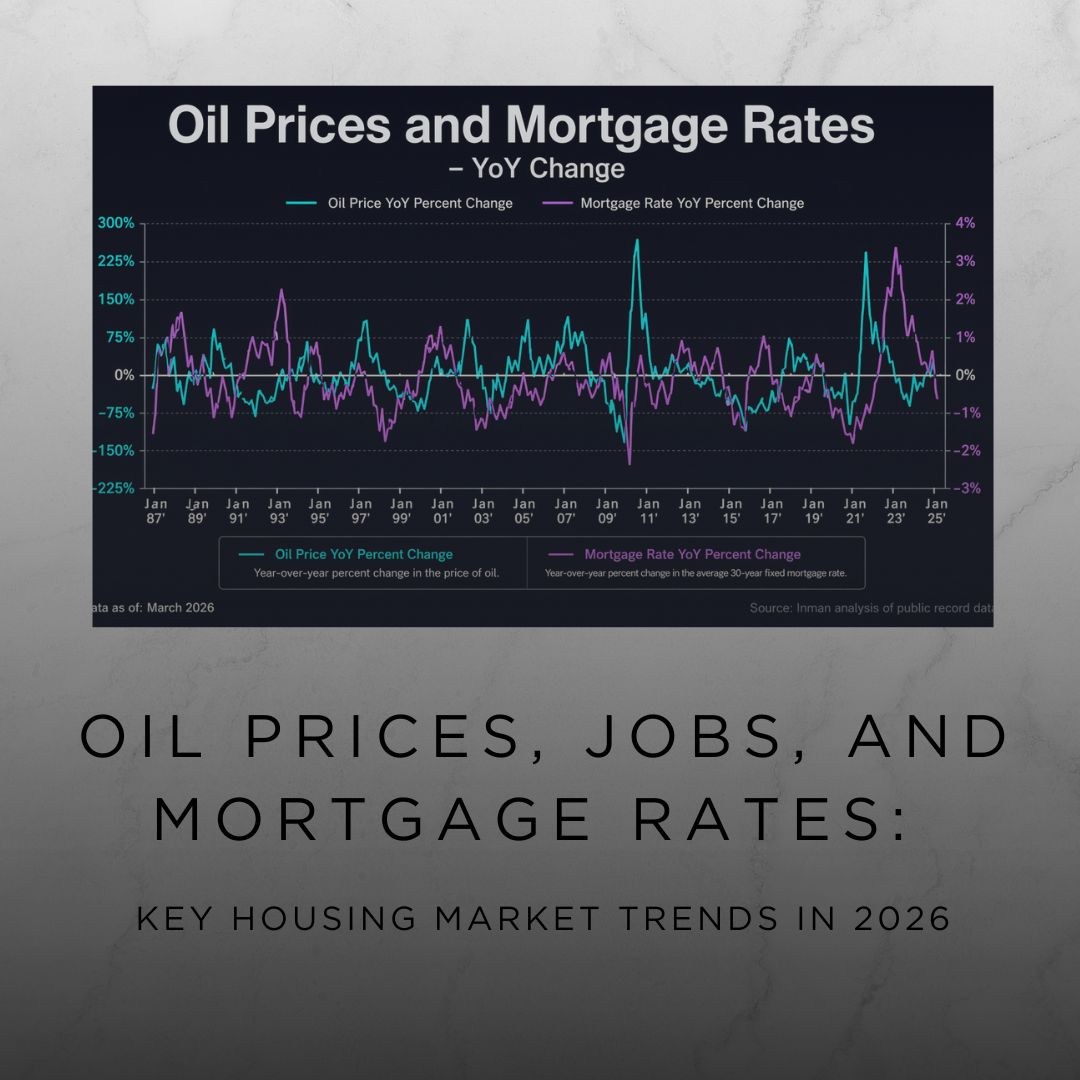
Oil Prices, Jobs, and Mortgage Rates: Key Housing Market Trends in 2026

3 Economic Numbers Shaping the Housing Market Right Now

If you’re trying to understand where the housing market is headed in 2026, three key economic indicators are telling the story: oil prices, job growth, and mortgage rates. Together, these factors are influencing affordability, buyer demand, and overall market conditions.

1. Oil Prices Are Driving Inflation

One of the biggest shocks to the economy this year has been the sharp rise in oil prices. A barrel of oil recently hit around $115—double what it was at the start of 2026

This spike is largely tied to ongoing geopolitical conflict, which is increasing the cost of energy worldwide. Higher oil prices don’t just impact gas—they raise the cost of producing and transporting goods, contributing to inflation across the economy. 

For the housing market, this matters because inflation often leads to higher interest rates, making borrowing more expensive.

2. Job Growth Is Strong—but Uncertain

The labor market showed strength in March, with 178,000 jobs added, marking one of the strongest months for job growth in over a year. 

However, the broader trend tells a more complicated story. Over the past year, job gains have been inconsistent, with noticeable swings between growth and decline. 

This mixed signal is important because a strong job market gives the Federal Reserve less urgency to lower interest rates. In other words, as long as employment remains stable, borrowing costs—including mortgage rates—may stay elevated.

3. Mortgage Rates Remain Elevated

Mortgage rates are currently hovering around 6.5%, after rising from earlier lows in 2026. 

This increase is closely tied to inflation and economic uncertainty. As rates climb, affordability declines, making it harder for buyers to enter the market—especially during what is typically the busy spring season. 

Higher rates are already slowing buyer demand, leading to a more balanced housing market rather than the competitive conditions seen in recent years.

4. Housing Inventory Is Increasing

Another important trend is the rise in available homes. There were about 964,000 active listings at the end of March, representing an 8% increase compared to last year

This increase in inventory could benefit buyers by giving them more options and negotiating power. However, it also means sellers need to be more competitive in pricing and presentation.

What This Means for Buyers and Sellers

  • Buyers: More inventory may create opportunities, but higher mortgage rates could limit affordability
  • Sellers: Increased competition means pricing and presentation matter more than ever
  • Market Outlook: The housing market is shifting toward balance, driven by broader economic forces

The Bottom Line

The housing market in 2026 isn’t being shaped by one single factor—it’s the combination of rising oil prices, a resilient but uneven job market, and elevated mortgage rates. These forces are working together to create a more balanced (and slightly more challenging) environment for both buyers and sellers.

Understanding these key numbers can help you make smarter real estate decisions in a rapidly changing market.


Source: Adapted from reporting by Inman

Posted in Market Updates
April 16, 2026

Foreclosures Are Rising in 2026: What It Means for the Housing Market

The U.S. housing market is showing new signs of strain as foreclosure activity rises in early 2026. According to recent data, foreclosure filings increased significantly in the first quarter of the year, suggesting that some homeowners may be feeling growing financial pressure.

In Q1 2026, more than 118,000 properties across the United States had foreclosure filings. That marks a noticeable increase compared to both the previous quarter and the same time last year. These filings include default notices, scheduled auctions, and bank repossessions—all indicators that homeowners are struggling to keep up with mortgage payments.

One of the most important warning signs is the rise in foreclosure starts, which jumped by about 20% year-over-year. This suggests that more homeowners are entering the early stages of foreclosure, often due to missed payments or financial hardship. At the same time, bank repossessions surged even more dramatically—up 45% from last year, indicating that more cases are reaching completion. 

What’s Driving the Increase?

While foreclosure levels are still below the peaks seen during past housing crises, the upward trend points to broader economic pressures. Rising living costs, higher mortgage rates, and overall affordability challenges are making it harder for some homeowners to stay current on their loans. 

This doesn’t necessarily mean a housing crash is imminent. In fact, many experts view this increase as part of a “normalization” process following historically low foreclosure activity in recent years. However, the steady rise does suggest that financial stress is building for certain segments of the population.

Where Are Foreclosures Happening Most?

Foreclosure activity is not evenly distributed across the country. States like Florida, Texas, California, and Illinois are seeing some of the highest numbers of foreclosure starts. Additionally, certain metro areas—including large cities—are experiencing higher concentrations of filings, reflecting local economic conditions and housing affordability challenges.

What This Means for Buyers and Sellers

For buyers, rising foreclosures could eventually create more opportunities in the housing market, potentially increasing inventory and offering lower-priced options. For sellers and homeowners, however, the trend is a reminder of the importance of financial planning and staying ahead of mortgage obligations.

The Bottom Line

The increase in foreclosure activity in 2026 is worth paying attention to, but it doesn’t necessarily signal a crisis. Instead, it reflects a shifting market where economic pressures are beginning to impact some homeowners. As the year continues, watching foreclosure trends will be key to understanding where the housing market is headed next.


Source: Adapted from reporting by Realtor.com

Posted in Market Updates
April 5, 2026

2026 Housing Market Shift: Why Home Sales May Not Surge After All (And What It Means for Buyers & Sellers)

The 2026 Housing Market Isn’t Playing Out Like Experts Expected

At the start of the year, the National Association of Realtors (NAR) projected a strong rebound in home sales—some forecasts even called for a double-digit increase.

But now? That outlook is shifting.

According to a recent report from Inman article on NAR forecast shift, NAR is pulling back on those expectations due to one major factor:

👉 Mortgage rate volatility


What’s Actually Happening with Mortgage Rates?

Mortgage rates have been… unpredictable (and honestly, a little dramatic).

  • Rates hovered near 7% in early 2025
  • Dropped closer to 6% in 2026
  • Even briefly dipped below 6%—a major psychological win for buyers 

But here’s the problem:
They’re not stable.

And in real estate, uncertainty = hesitation.

When rates bounce around, buyers pause. Sellers hesitate. Deals slow down.


Why Home Sales Are Being Reined In

Even though affordability has slightly improved, the market isn’t taking off like expected.

Here’s why:

1. Buyers Are Still Payment-Sensitive

Even a small rate change can mean hundreds of dollars per month difference

So instead of rushing in, buyers are:

  • Waiting 
  • Watching 
  • Trying to “time” the market (spoiler: risky move) 

2. The “Lock-In Effect” Isn’t Fully Gone

Many homeowners are still sitting on ultra-low rates from 2020–2022.

Translation:
👉 They don’t want to sell and take on a higher rate.

That keeps inventory tighter than normal.


3. Economic & Global Uncertainty Is Creeping In

Things like inflation concerns, geopolitical tension, and oil prices can impact mortgage rates quickly 

And when consumers feel uncertain, they don’t make big financial moves.


But Here’s the Plot Twist (And Opportunity 👀)

This is NOT a crash.

It’s a rebalancing.

  • Prices are still holding (even increasing modestly) 
  • Inventory is slowly improving 
  • Affordability is better than last year 

👉 We’re moving from chaos → strategy


What This Means for Buyers in 2026

If you’re buying, this market actually gives you leverage you didn’t have 2–3 years ago:

  • Less competition 
  • More negotiating power 
  • Potential seller concessions 
  • Ability to refinance later if rates drop 

💡 Translation: You don’t need perfect timing—you need a smart strategy.


What This Means for Sellers

Let’s be honest (because I always am):

You can still win—but not by winging it.

Today’s sellers need:

  • Strategic pricing (not “let’s test it high and pray”) 
  • Strong marketing 
  • A dialed-in agent who knows how to position your home 

Because buyers?
They’re picky again.


The Bottom Line

The 2026 housing market isn’t crashing… it’s correcting expectations.

NAR expected a surge.
Instead, we’re getting something healthier:

👉 A more balanced market
👉 More intentional buyers
👉 Smarter decisions on both sides

And honestly?
That’s where the best deals happen.


Thinking About Buying or Selling in Columbus?

Whether you’re trying to time the market or just figure out your next move—let’s map out a strategy that actually makes sense for you.

📩 Message me for a custom home value or buying plan


SOURCE

This article references reporting from Inman News and data from the National Association of Realtors (NAR) regarding 2026 housing forecasts and mortgage rate trends.

Posted in Market Updates
March 17, 2026

Why Mortgage Rates Move (And What It Means for Homebuyers in Columbus, Ohio)


Why Mortgage Rates Move (And What It Means for Homebuyers in Columbus, Ohio)

Meta Description:
Wondering why mortgage rates change so often? Learn the key factors that influence mortgage rates and what they mean for homebuyers in Columbus, Ohio.


Why Do Mortgage Rates Move So Much?

If you’ve been watching mortgage rates lately, you’ve probably noticed they don’t move in a straight line. One week they drop, the next week they climb again.

Understanding why mortgage rates change can help buyers make smarter decisions about when to purchase a home.

Recently, mortgage rates briefly dipped below 6% before climbing back above that level due to changes in inflation expectations and economic data. 

But the truth is: mortgage rates aren’t controlled by one single factor.They respond to a combination of economic forces happening behind the scenes.

Let’s break down the biggest ones.


1. Inflation: The Biggest Driver of Mortgage Rates

Inflation is one of the most important forces affecting mortgage rates.

When inflation rises, lenders demand higher interest rates to compensate for the fact that money will be worth less in the future. 

For example:

  • Higher gas prices
  • Rising consumer prices
  • Increasing wage growth

These signals can push inflation expectations higher, which often pushes mortgage rates higher as well. 

When inflation cools, mortgage rates tend to ease.


2. The 10-Year Treasury Bond

Most people think the Federal Reserve directly sets mortgage rates, but that’s not exactly how it works.

Mortgage rates tend to follow the 10-year U.S. Treasury yield, which acts as a benchmark for long-term borrowing costs. 

When Treasury yields rise:

➡ Mortgage rates usually rise.

When Treasury yields fall:

➡ Mortgage rates usually fall.

Lenders typically price a mortgage as the 10-year Treasury yield plus an additional spread to cover risk and costs. 


3. The Federal Reserve (Indirectly)

The Federal Reserve does not directly set mortgage rates, but its policies influence them.

When the Fed raises short-term interest rates to slow inflation, it often pushes bond yields higher, which eventually leads to higher mortgage rates. 

When the Fed cuts rates to stimulate the economy, mortgage rates may drift downward.

However, the relationship isn’t always immediate or predictable.


4. The Overall Strength of the Economy

Strong economic data can also cause mortgage rates to rise.

If the economy is growing quickly, with strong job growth and consumer spending, investors may expect inflation to remain elevated. 

That expectation can push long-term interest rates higher.

On the flip side, when the economy slows, investors often move money into safer assets like bonds, which can pull mortgage rates down.


5. Global Events and Market Sentiment

Mortgage rates are also influenced by global financial markets.

Things like:

  • International conflicts
  • Government policy changes
  • Stock market volatility
  • Global economic uncertainty

can all impact bond markets, which in turn affect mortgage rates.


What Mortgage Rates Mean for Homebuyers

Even small changes in mortgage rates can make a big difference in affordability.

For example, a 1% drop in mortgage rates can allow millions of additional households to qualify for a home loan because monthly payments become more manageable. 

That’s why buyers often rush back into the market when rates fall.


What This Means for the Columbus Housing Market

In Central Ohio, demand for homes remains strong, and mortgage rate movements can quickly influence buyer activity.

When rates dip:

  • More buyers enter the market
  • Competition increases
  • Homes may sell faster

When rates rise:

  • Some buyers pause their search
  • Negotiation opportunities increase

Understanding these trends can help buyers and sellers time their moves strategically.


Thinking About Buying or Selling in Columbus?

Mortgage rates are just one piece of the real estate puzzle. The right time to buy or sell often depends on your personal goals, timeline, and the local market conditions.

If you're curious about:

  • Current mortgage trends
  • Home values in your neighborhood
  • Buying or selling in Columbus

Reach out anytime.

👉 Search homes for sale in Columbus
👉 Get a free home value estimate

Or connect with me directly for a strategy tailored to your situation.


Posted in Market Updates
March 11, 2026

Columbus Ohio Housing Market Update: Lower Mortgage Rates Bring Buyers Back

Mortgage Rate and Buyer Demand


Lower Mortgage Rates Are Bringing Buyers Back Into the Market

The housing market continues to respond quickly to even small changes in mortgage rates. Recent data shows that when borrowing costs drop—even slightly—buyers are ready to jump back into the market.

According to the Mortgage Bankers Association, mortgage applications recently increased as buyers took advantage of temporarily lower interest rates. Purchase applications—those tied directly to homebuying—rose significantly, showing renewed demand from buyers who had been waiting on the sidelines.

This trend highlights something real estate professionals have been seeing firsthand: buyer demand is still strong, but many buyers are sensitive to mortgage rate changes.


What Lower Mortgage Rates Mean for Homebuyers

When mortgage rates dip, buying power improves.

Even a small decrease in interest rates can reduce a buyer’s monthly payment or allow them to afford a higher-priced home. Because of this, many buyers closely watch rate movements and jump into the market when favorable opportunities appear.

As we head further into the 2026 spring real estate market, small shifts in mortgage rates could continue to drive bursts of buyer activity.

For buyers in Columbus, Ohio and surrounding Central Ohio communities, this means competition may increase when rates drop and more buyers begin touring homes.


What This Means for Home Sellers in Columbus

If you're thinking about selling your home in Central Ohio, increasing buyer activity can work in your favor.

When more buyers enter the market, well-prepared homes often receive stronger interest and sometimes multiple offers. Homes that are updated, clean, and move-in ready tend to stand out the most.

Preparing your home before listing can help maximize its value when buyer demand increases.

Common improvements that make a big impact include:

  • Fresh interior paint

  • Updated lighting

  • Minor cosmetic repairs

  • Decluttering and staging

  • Improving curb appeal

Many of these upgrades are relatively affordable but can significantly improve how buyers perceive a home during showings.


Preparing Your Home for the Spring Market

Spring is traditionally the busiest season in real estate, and early preparation can give sellers an advantage.

If mortgage rates remain stable or decline further, buyer demand could continue rising throughout the year. Homeowners who begin preparing their homes now will be in a strong position when the right buyer comes along.

If you're considering selling your home in Columbus, Dublin, Powell, Grove City, or surrounding Central Ohio communities, understanding market trends and preparing your home properly can make a major difference in your final sale price.

Posted in Market Updates
Feb. 16, 2026

The Annual Reset Your Home Deserves

Most people only prepare their home like it’s “for sale” when they’re actually moving.

I believe you should do it once a year—whether you’re selling or not.

Not for the market.
Not for listing photos.
Not for strangers walking through your space.

For you.

There’s something transformative about the way we prepare a home to sell. We declutter ruthlessly. We deep clean every corner. We fix the things we’ve been putting off. We simplify and style with intention. We make it feel calm, open, and inviting.

And then… we leave.

But what if we stopped waiting for a move to experience that feeling? What if “move-in ready” became your everyday standard instead of a temporary phase?

Create Your Own Annual “Open House”

Once a year, set aside a weekend and walk through your home as if you’re seeing it for the first time. Slow down. Stand in each doorway. Notice what feels peaceful—and what feels overwhelming.

Then take action.

Declutter with intention.
Go drawer by drawer. Closet by closet. Surface by surface. Clear off countertops. Edit bookshelves. Simplify entryways. If you wouldn’t want it on display during a showing, ask yourself why it’s on display now.

Take care of the small repairs.
The loose door handle. The scuffed baseboards. The wobbly shelf. The chipped paint. These tiny unfinished tasks create quiet visual stress. Finishing them brings a surprising sense of closure.

Deep clean beyond your usual routine.
Wipe down trim and doors. Clean vents and light switches. Wash windows and windowsills. Dust the places you normally skip. A truly clean home feels different.

Refresh what feels tired.
Touch up paint. Rearrange furniture for better flow. Remove a few decorative items instead of adding more. Create breathing room.

Evaluate how your home functions.
Is there a space that feels chaotic? A corner that’s become a drop zone? A room that’s forgotten? Reclaim it.


The Result?

You create:

  • Less visual noise
  • Less to manage and maintain
  • More ease in your daily routines
  • A home that feels lighter and more intentional

You don’t need a new house to feel a fresh start.

Sometimes you just need to see your current home with new eyes—and care for it accordingly.

Treat your home like it matters.
Not when you’re leaving.
But while you’re living in it.


Posted in Home Tips